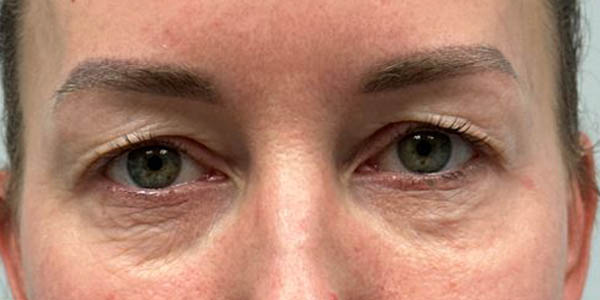
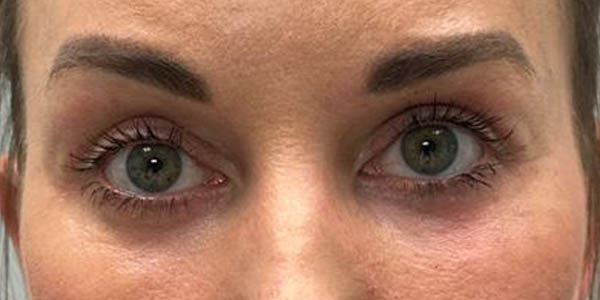
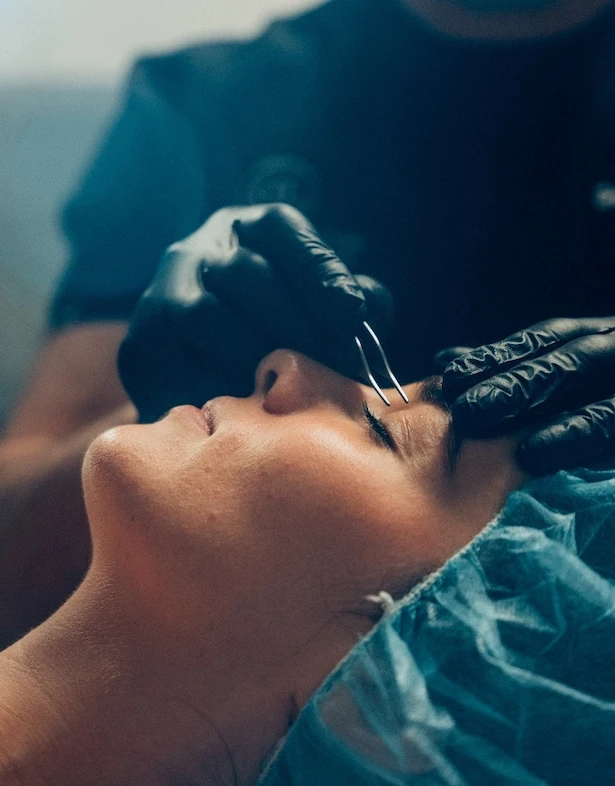
While traditional eyelid surgery might be the best procedure for you, it’s important to understand that there are options. Some patients require only lower eyelid surgery, while other patients need only upper blepharoplasty. A major part of our practice is also dedicated to revision eyelid surgery. Below, we’ve covered the different types, as well as Asian eyelid surgery, which we perform for our patients of Asian descent.
Lower Eyelid Surgery
The appearance of bags in the lower eyelids is usually a result of fat pockets from the eye socket that have become more noticeable over time. Although traditionally these fat pockets were just removed, in most cases, a more modern approach to lower eyelid blepharoplasty surgery involves sculpting these fat pockets and re-positioning this fat into other areas of the lower eyelid that are missing volume. This approach allows Dr. Lewen to create a much more natural-appearing result, and he is able to avoid having issues with the eyelids appearing too hollow or sunken after surgery. Hollowness in the eyelids can frequently create a more aged appearance, and this would not be a desired result of surgery.
For lower eyelid surgery, the average procedure time is approximately two hours. There are two basic approaches to this procedure, with the incisions either made through the skin hidden in the corners of the eyes and underneath the eyelashes, or with the incisions hidden on the inside of the lower eyelid. The type of approach to the lower eyelid that is best for each individual patient will be determined by Dr. Lewen at the time of your consultation and is based on a variety of factors such as your individual anatomy, the amount of excess skin present, the number of fat pockets that are present, your natural skin tone, other conditions that may be present, and the type of cosmetic result that is desired. For more information on lower eyelid surgery, please view our page on the surgery, which provides a lot more details on this procedure.
Upper Eyelid Surgery
Upper eyelid surgery in Miami with expert oculofacial plastic surgeon, Dr. Gregory Lewen is ideal for many patients whose upper eyelids may appear to droop. Upper blepharoplasty takes about one hour to perform on average. The procedure is often referred to as an “upper eyelid lift.” The incision for this procedure is usually made within the fold of the upper eyelid so it would not be visible when the eyes are open. Stitches are used to close the incision and they are usually removed about one week after surgery during a quick and painless office visit. The procedure can be performed under IV (conscious) sedation, or with oral sedation and local injections, depending on the preferences of you and Dr. Lewen. For some patients with certain medical conditions, additional monitoring may also be required.
For more information on upper eyelid surgery, please view our full page on the procedure.
Often, a mini-browlift or “brow tuck” procedure may be recommended to do in combination with an upper eyelid lift as both areas can contribute to the appearance of saggy, droopy, upper eyelid skin. When both issues are addressed together, many patients will have a greater level of satisfaction with their results.
Asian Eyelid Surgery
Men and women of Asian descent tend to have upper eyelids that do not have as well-defined of a pretarsal crease, the fold of tissue that is found in the upper eyelid area. This can potentially cause the eyes to appear heavier and sometimes with less light when compared to some other eye shapes. Asian eyelid surgery is performed to enhance the crease.
Revision Eyelid Surgery
Revision eyelid surgery, also called blepharoplasty revision, corrects unsatisfactory results or complications from a previous eyelid surgery, often one performed elsewhere. A major part of Dr. Lewen’s Miami practice is dedicated to revision cases, which can include overcorrection (too much skin or fat removed), a hollowed or sunken appearance, visible or webbed scarring, lid crease issues, eyelid retraction, or a change in the shape of the eyes. Because previously operated eyelid tissue may be scarred or compromised, revision blepharoplasty is significantly more complex than a primary procedure and should be performed by a fellowship-trained oculofacial plastic surgeon who can protect both your appearance and the health of your eyes and vision. If you are unhappy with the results of eyelid surgery performed by another doctor, we invite you to learn more on our revision eyelid surgery page or schedule a consultation at our Aventura office, serving Miami and Fort Lauderdale.
Droopy Eyelid Surgery (Ptosis Repair)
Ptosis repair is often confused with upper blepharoplasty, but the two procedures treat different problems. While blepharoplasty removes excess skin and fat, droopy eyelid surgery corrects ptosis, a drooping of the eyelid margin itself, usually caused by stretching or weakening of the levator muscle that lifts the eyelid. Patients with ptosis frequently say their eyes look small, heavy, or tired in photos, and in more advanced cases, the drooping lid can actually block the upper field of vision. Depending on your eyelid measurements, Dr. Lewen may recommend an internal approach with no external incision, or an external approach hidden within the natural eyelid crease. Ptosis repair can also be combined with cosmetic blepharoplasty for a comprehensive result. Learn more on our droopy eyelid surgery (ptosis) page.
Canthoplasty & Canthopexy
Canthoplasty and canthopexy are specialized procedures that address the outer corner of the eye, known as the lateral canthus. Canthopexy tightens and supports a lax lower eyelid, while canthoplasty reconstructs and repositions the corner of the eye to correct drooping, rounding, or sagging, and in some cases to subtly enhance eye shape, such as in the popular “fox eye” or almond-eye look. These techniques are frequently performed alongside lower blepharoplasty to provide proper eyelid support and prevent post-surgical complications like eyelid retraction. Because the lateral canthus is a delicate anatomic structure, canthal surgery demands the precision of an oculofacial plastic specialist. Visit our canthoplasty / canthopexy page to learn whether one of these procedures may be right for you.
Ectropion & Entropion Repair
Ectropion and entropion are eyelid malposition conditions that affect both comfort and appearance. With ectropion, the lower eyelid turns outward and sags away from the eye, which can cause tearing, redness, irritation, and chronic dryness. With entropion, the eyelid turns inward, causing the eyelashes to rub against the surface of the eye with every blink — an uncomfortable condition that can lead to blurry vision and corneal scarring if left untreated. These conditions may develop from age-related eyelid laxity, scarring, sun damage, or as a complication of previous eyelid surgery. As a double board-certified oculofacial plastic surgeon, Dr. Lewen performs ectropion and entropion repair surgery for patients throughout Miami, Aventura, and Fort Lauderdale, restoring the eyelid to its correct, healthy position against the eye.
Eyelid Surgery for Men
More men than ever are seeking eyelid surgery in Miami, and male blepharoplasty requires a distinctly different approach from surgery performed on women. Men’s eyelids differ in brow position, skin thickness, and lid crease height, and preserving a natural, masculine appearance is essential — an overly elevated crease or over-resected eyelid can unintentionally feminize the eyes. Dr. Lewen tailors his surgical planning for his male patients with these differences in mind, helping men look more rested, alert, and confident without looking “done.” Whether you’re concerned about hooded upper lids, under-eye bags, or a tired appearance that doesn’t match how you feel, visit our eyelid surgery for men page to learn more about male blepharoplasty in Miami, Aventura, and Fort Lauderdale.